Sunday, March 12, 2023

2022 Best Picture Rankings

It's that time of year again! After viewing (almost) all the Best Picture nominees, I rank them based on my assessment of their worthiness for the Best Picture award. Note that this is not a prediction of who will win, but rather a statement of how I would vote if I could and how I'd rank the also-rans. Every year is a little different in terms of the collective quality of the films. Sometimes there's a battle royale of multiple highly deserving works, and those are the best years (think Boyhood and Birdman in 2014). Sometimes there's a wide swath of worthy films, but no clear standouts that are going to live in our collective memory forever (think 2015, when Spotlight captured Best Picture but isn't mentioned much today, but neither are any of its major competition). 

This year, the quality at the top is really limited to one obvious winner, the middle tiers are well populated, but the depth is very bad, with three films I question whether they should have been nominated. Here we go. 

 10. Avatar: The Way of Water

Avatar 2 won’t be coming to streaming before the Oscars, and it’s just not worth dragging myself to the movie theater for what I fully expect to be a b-movie with fancy graphics like its predecessor was, so this will be brief. After watching the original, I felt insulted that people actually talked about it being a Best Picture favorite, and was prepared to be mad at the results at the 2010 Oscars. Thankfully, the Academy had the good sense to reward The Hurt Locker in what was in retrospect a very weak year for film (seriously, Up probably should have won, which gives you an idea of how weak the slate was -- as well as how excellent that particular Pixar film was). 
The second installment only has a 76% fresh rating on Rotten Tomatoes, which while good compared to most films, is very weak for Oscar consideration. The first film disguised a hackneyed script and weak cast with very pretty graphics, and the ads for the sequel indicate little has changed. The fact that director James Cameron has little respect for the peoples whose story he rips off with his white savior complex just makes things worse, turning the Avatar franchise into the indigenous slaughter equivalent of what Crash was for race relations. Hollywood really needs to stop embarrassing itself by making and then pouring accolades on these naive, tone-deaf insults. 

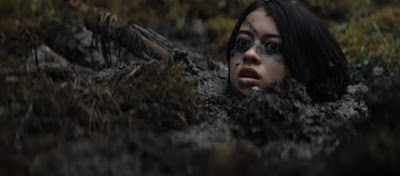
9.5 What should have been nominated instead: Prey 


If the Academy wanted to honor a genre film with indigenous overtones, they should have considered Prey. Easily the best Predator sequel ever (and honestly, I'd put it over the original by a mile as well), Prey treats its subjects with respect, features a largely Native American cast, tells a taut story, features a dog that can act rings around the likes of Zoe Saldana and Sam Worthington, and has incredible cinematography (with some of the best lit and filmed night action sequences I've seen in a long time). It is far from perfect and suffers from not having the same visual effects budget as Avatar, but in terms of quality of film, it's arguably a stronger candidate than the bottom three of the actual nominees. 

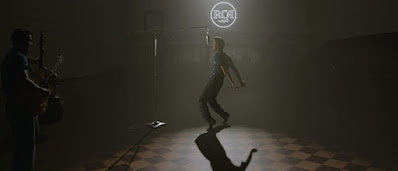
9. Elvis 


Elvis has some good points to it, but largely it's one of the weakest non-franchise entries into the Best Picture race in recent memory. It has absolutely zero nuance or complexity. Austin Butler does a good job with what he’s given, but his Elvis is a perpetual victim to whom things happen, with no agency in his own story. Ray and Walk the Line (which ironically had a much more human Elvis for the five minutes he appeared on screen there) were much better films because they looked at their protagonists with relatively unflinching eyes, exploring the various failings of their subjects. This film just uses Elvis as a punching bag for its star antagonist, Colonel Tom Parker. 

Seriously, you'd never tell he was a drug addict except for two scenes in which he acts nothing like the rest of the film.

Speaking of which, this is easily the worst performance of Tom Hanks’s career. Between his inability to keep the Colonel’s voice consistent, the embarrassing fat suit, and the sheer lack of subtlety, the entire endeavor is just a boondoggle. The plastic looking animated characters Hanks played in The Polar Express showed more expression. 

I guess even great actors have serious misses.

I've never been a Baz Luhrmann fan, as I find his films sacrificing substance for style. Elvis does not change that thinking. 

8. Top Gun: Maverick 


I honestly enjoyed watching Top Gun: Maverick and appreciate its good qualities, but it's just not a serious contender because of one fatal flaw: its script. It’s a great technical movie with some very good performances, but given the story takes the mission from Star Wars, the climax from Iron Eagle, its opening act from The Right Stuff, and then structures it all using the skeleton of the first Top Gun movie, it’s not exactly bursting with originality. Sequels need to take a cue from classics like The Godfather Part II and The Empire Strikes Back and realize the path to greatness is to capture the spirit of the original, not replay it note for note. 

Note to Hollywood: please stop making your sequels note for note remakes of the original.

However, there are some excellent things to appreciate about the film. It is shot beautifully, with easily the most stunning aviation scenes ever put on film. It very much deserved its nomination for visual effects, and I am surprised it wasn't also recognized for its cinematography. 

It also features a largely strong cast, with Miles Teller and Jennifer Connelly doing well playing off of Tom Cruise. Say what you want about Cruise, he is one of those actors that never takes a film off and never loses intensity -- you could ask him to spend a film miming being trapped in an invisible box or walking against the wind holding an invisible umbrella and he would still bring his A game. It would be interesting to see him act opposite Denzel Washington at some point. 

He has made some interesting life and work choices, but you can't say he doesn't give it his all.

Overall, Top Gun: Maverick I could see being honored as the last film onto the slate, a nod to the movie that helped save the year's box office from the doldrums of Hollywood's COVID years. The fact that it's above two other films on this list is kind of embarrassing. 

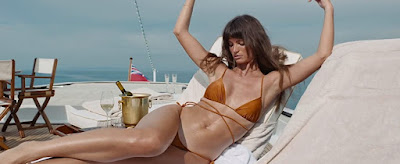
7. Triangle of Sadness 


Triangle of Sadness is a quirky black comedy in apparently the year for quirky films and black comedies. 

Triangle of Sadness is largely about power dynamics and what our "civilized" society values versus what an unstructured society values. The luxury cruise that takes up much of the movie's run time is populated with some of the most useless rich people you'll ever encounter: arms dealers who've clearly never left their offices to experience the warfare they support, Russian oligarchs proud to let everyone know they deal in "shit", and influencers who are not so much wealthy as just prone to receive things for free if those things can somehow be associated with their pouty lips and rock hard abs online. 

Absolutely useless.

After dozens of minutes subjected to the whininess, casual empty philosophizing, and just shear uselessness of the cruise guests, you're ready to see something bad happen to them. Yet after the ship experiences a major disaster, the formerly powerless and now quite important staff becomes no less insufferable and self-oriented. Triangle of Sadness is not kind in its view about the human condition. 

It's kind of a copout that the nicest one in this photo is also the prettiest.

It’s a bit messy, where the film meanders a bit too much and approaches its central theme quite slowly at first. It’s the kind of film that I would have pegged as one of the last films onto the slate, as there was room for one more and this was different and crafted well enough to merit consideration. However, given it’s better than a third of the films nominated, there goes that theory. It’s one of those films that I enjoyed watching but doubt I’ll ever be in the mood to rewatch. 

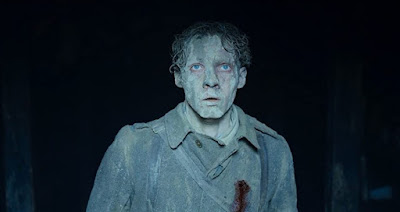
6. All Quiet on the Western Front 


All Quiet on the Western Front is a perfectly competent war movie and adaptation of a classic in modern literature. Having said that, it's not the most memorable war movie nor the most amazing adaptation of a classic in modern literature. It suffers from coming on the heels of the masterful 1917 and the incredibly well crafted Dunkirk, because in comparison, it's just not that advanced in its filmmaking. 

That doesn't mean that it's not a worthwhile film, though. It tells the story of German schoolboys who happily go off to war and of course learn quickly that war means horror, not adventure. It is the kind of story that makes Pippin and Merry and their evolution (from joining Frodo's quest on a lark to being wizened veterans who realize at the end that only Frodo and Sam understand what they've seen and done) my favorite thread of the Lord of the Rings books (sadly, the movies make the unwise choice of having Pippin and Merry fall in with Frodo and Sam by pure happenstance instead). 

"Yes, yes! Let's go off to war!  It'll be a lark!"

The robbing of innocence that war subjects its participants and bystanders to is not only universal, it's key to the themes of the film. New recruits die en masse for underestimating the dangers present. Soldiers are faced with weapons that they'd not even dreamed of, participate in brutal hand-to-hand combat that leaves them shaken, and blanch at a fate of being permanently crippled. Even the impending armistice brings no safety, as the soldiers are imperiled by the brutality of the enemy, the incompetence of their own leadership, and even threats from the local civilian population tired of being taken advantage of. 

Nothing ends well in war.

War is hell, and All Quiet on the Western Front communicates that ably. 

5. Women Talking 


It’s hard to picture a movie feeling taut and stressful when it primarily consists of a group of people sitting in a space talking. But when the topic at hand revolves around whether a group of Mennonite women should escape the Bolivian enclave where they’re kept illiterate, often abused by their husbands, and frequently raped by other members of the community, or whether they should stay and fight for their rights while keeping their families together, let’s just say the stakes are raised. 

From a structure and dramatic foundation perspective, the closest I can come to this movie is Twelve Angry Men. But instead of deciding the fate of another, these angry women are deciding their own fates, as well as those of their daughters. The fact that it revolves around systematic sexual assault and the ongoing denial by the church elders of the assaults actually happening — in the post-MeToo age nonetheless — makes this film a complete gut punch. 

It is saddening how simultaneously naive and worldly these girls are due to their circumstances.

As such, I can appreciate the craft that went into making it and be glad that I experienced it while also never wanting to see it again. It’s a fantastic film, but it’s not the kind of movie you want to view just for a laugh. This one sticks with you for awhile. 

What makes this all the more awful is the film, while purely fictional, is inspired by the very real rapes and denial that happened to a real-life Mennonite enclave. In that case, the perpetrators were actually arrested, tried, and convicted rather than bailed out by the men of the fictional enclave. As a result, I don’t believe a decision like the one dramatized here occurred. But the film will keep you on edge about what decision will be made, and even more so, whether the women be safe in enacting their decision. 

Rooney Mara really needs more star turn opportunities.

Rooney Mara, Claire Foy, and Sheila McCarthy do much of the heavy lifting, with McCarthy and Foy on extreme ends of the question being debated and Mara roaming the space in between. Frances McDormand plays a big part in the trailer to add her star power, but actually a very small bit part in the film itself. 

4. Tár 


Tár is a great character study and an absolute tour de force by Cate Blanchett. It has a real intelligence to it, providing a master class on classical music and conducting to the audience. 

Tár emphasizes to you the cues that composers use to communicate their intent and message to the listener, and this property is mirrored in the use of nonverbal cues to communicate character intent and thoughts to the viewer. The film trades in unspoken glances and posture as a communication medium that overdubs the dialogue. 

These quiet moments throughout the film are everything the dialogue lacks in terms of emotion.

Blanchett does a terrific job walking the tightrope between making her character too sympathetic and too villainous. There are some interesting parallels that are really contrasts between her character and J.K. Simmons’ portrayal of the professor/band leader in Whiplash. Both are classic examples of the adage that you’re never the villain in your own story, though Tar is a billion times more subtle. 

Fortunately, Blanchett doesn't throw a piano at a wall.

Overall, I see why Tár was at the top of so many "Best of" lists for 2022. It just seems a bit decompressed, and I question if it couldn’t have been more effective with a tighter running time. As a result, it stands just outside the top ranks of my selections. 

3. The Banshees of Inisherin 


The Banshees of Inisherin is the first of three films I'd seriously consider for the Best Picture Oscar. 

It is not an important film, but takes its spot due to its superb craftsmanship and stellar performances. The cinematography is stunning, using the landscape of its Irish island setting as an effective canvas on which it paints its tale. All four acting nominations were well earned, with perhaps Barry Keoghan's being the iffiest. The film's story benefits from all of this craft, and it's an interesting, multi-faceted one. So dark and yet so light at the same time. 

I mean even the animals fit the canvas quite well.

Deep down, the film is about the relationships that people have, in all their complexity. You can love and hate someone at the same time, and the people of Inisherin have reason to do both with regularity. A friend can be one's greatest asset and greatest annoyance at the same time. A young man can be both creepy and sweet at the same time. A brother can be the center of one's world and the thing that holds you back. A man can be an abusive bully and a caring father at the same time. We are complex, broken animals, and that brokenness can intermingle with others' in interesting, endearing, and terrifying ways. Banshees embraces all aspects of that complexity in a wonderfully interpersonal story. 

Even the problematic relationships like this one are important.

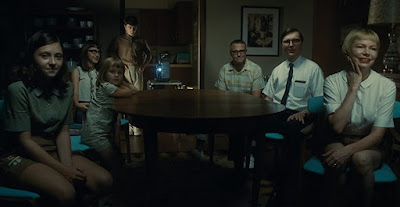
2. The Fabelmans 


The Fabelmans: So. Fucking. Delightful! Why do I get the feeling that there was more truth to this than most films that explicitly state “Based on a True Story”? 

I normally rag on Spielberg’s endings, which I think often last a scene or two (or in the case of Ai, a whole bunch) too long, but this one was perfect! 

Michelle Williams is as incredible as she always is. How did she become our generation’s Meryl Streep? Sadly, her excellence and her character’s range of emotions throughout the film overshadows the quiet, strong excellence of her co-star Paul Dano. It’s become apparent that a lot of Spielberg’s films are love letters to his father, and from this film, I can kind of see why. 

Such a great job by these two.

And Gabriel LaBelle. Holy cow, in the couple of hours of screen time he has, he morphs into the Steven Spielberg that made Jaws so incredibly. And I kind of want to see a Fabelmans sequel now, showing that start to his career. 

The casting was an amazing bullseye on this one.

This is really what filmmaking should be about: about craft, and emotion, and above all joy at what you’re doing. The fact that you can palpably feel it is a testament to the skill and artistry of Spielberg. It deserves all the accolades it’s received. 

1. Everything Everywhere All at Once 


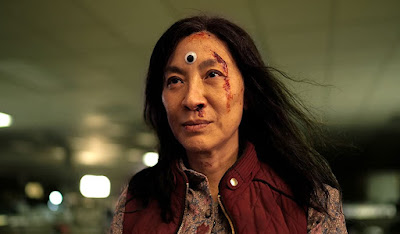
I think the best way to describe Everything Everywhere All at Once is if someone took drafts of scripts for Being John Malkovich, The Matrix, Turning Red, and Brainsmasher, randomly shuffled the pages together, shot it, and somehow made it work. It is easily the most creative film we've seen in the Best Picture category in many years. 

I can only imagine the joy the people who made this film had while making it. It is creativity unbridled by constraints of "what should happen", but done in a way that holds together quite well. The film has no end of absurdist moments that seem to have had no boundaries placed upon them, and that freedom allows a film that runs well over two hours to seem like a snap of the fingers compared to competing movies with surprisingly shorter runtimes. 

Indeed.

The focus of the film is the intertwined forces of family and fate. Are we the sum of our decisions, or are we something more, defined by our inextricable bonds with each other? It is from this exploration that Everything Everywhere All at Once gets its greatest strength: its heart. It makes the case for acceptance and vulnerability and, in the end, just accepting love as it is. As a result, the film finds deep emotion from things as absurd as a man and his raccoon, two women with hot dog fingers, and most importantly, two rocks sitting side by side on the edge of a cliff. 

The cast is fantastic in pulling the emotional tapestry together and making it as real as can be in the midst of all the madness. Michelle Yeoh and Jamie Lee Curtis have both had career renaissances now in their silver years, and Ke Huy Quan has mounted an acting comeback for the ages with his supporting role. 

The cast, like the family they play, are amazing and brilliantly unique.

I imagine with the success of Everything Everywhere All at Once, there will be inevitable copycats, as Hollywood often looks to superficial trappings rather than the heart of a film when making decisions. But I hope that this will prediction will prove incorrect. Everything Everywhere All at Once is a singular achievement in creative film making and should stand alone unsullied by inferior copies.

Sunday, March 27, 2022

2022 Oscar Picks

Every year, I pick my winners among categories where I've seen the majority of nominees.  These reflect only who I'd vote to give the Oscar to if I could, and not an attempt to predict who will win (though I may talk a little bit about predictions as well).  In the past my picks sometimes coincided with the Academy's selections, but they can easily diverge.  Last year, my picks matched the Academy's in 10 of 15 categories.

Last year was strange and this past year still didn't see the film industry recover.  How else do you explain a Best Picture slate that didn't feature a single Best Actress nominated performance?  I did at least do my Best Picture rankings, as opposed to last year when the slate was a little too weak to warrant commenting on every film.  However, due to a number of factors, this list will be a bit odd this year, which I'll explain along the way.  Let's get to it.

Best Picture


If you read my Best Picture rankings, you know that I went with The Power of the Dog.  Of the nominees, it was the least flawed, with strong performances, good direction, and beautiful cinematography.  It would not win against most prior Best Picture winners, but this is not an ordinary year.

Best Director


This is a tough one, because all of the directors did wonderful jobs.  Kenneth Branagh showed his mastery of craft in Belfast.  Ryusuke Hamaguchi made three hours of driving and talking compelling.  Paul Thomas Anderson made a technically wonderful movie of a very problematic script.  And Steven Spielberg Steven Spielberged all over West Side Story.  But my choice here is Jane Campion for adapting The Power of the Dog.  Her choices were spot on, and she made a fantastic film with few blemishes.

Best Actor


I think it's easy to exclude Javier Bardem and Denzel Washington because neither performance was their career best.  I've heard rumblings for Will Smith, and while he was fantastic, it was a bit of a layup given Richard Williams was written as the Will Smithiest of Will Smith roles.  Benedict Cumberbatch was excellent as Phil Burbank, part bully, part manly cowboy, part scared/scarred child.  But my statue would go to Andrew Garfield, who did it all in Tick, Tick... Boom!  He sang, he made us laugh, he made us cry, he showed us wonder.  It was truly a great performance and not just handing an award to an actor for singing (<cough>, Emma Stone, <cough>).

Best Actress


I'm a bit stuck, because I did not see four of the five nominated performances, and don't plan to anytime soon.  I'd rather miss a great performance than watch anything to do with Tammy Faye Bakker, for example.  I'd normally skip a category I haven't seen most of the nominees for, but this is Best Actress, and Nicole Kidman really did a wonderful job inhabiting Lucille Ball, so I'm going to give her my award a bit by default and a bit by merit.

Best Supporting Actor


All of these performances were quite good, but Troy Kotsur stands out.  Not only did he have the role that did the most heavy lifting for his film, playing the deaf father balancing between worrying about losing his daughter and proud of the adult she's turning into, but he also had to connect with audiences despite not using a language most viewers know.  There was not a time that we didn't know and connect with what his Frank Rossi was thinking and feeling, even if we didn't know ASL and didn't read the subtitles.

Best Supporting Actress


I didn't see The Lost Daughter so can't comment on Jessie Buckley's performance.  Even so, I don't know how I could hand this to anyone but Ariana DeBose.  Anita is a role made for stars, and she managed to elevate it further.  I can see a world in which Aunjanue Ellis wins for King Richard, but DeBose's performance across the board was lights out.

Best Original Screenplay


This is a very weak category this year.  I've not seen The Worst Person in the World.  Adam McKay's script for Don't Look Up is hamhanded.  King Richard is quite good, but fails to deviate from its hero worship of its subject.  Licorice Pizza is, well, problematic.  So I think Belfast wins here for me by default.  If it doesn't win, I'll hope that the Academy picked King Richard, since it's less noxious than the other nominated films I watched.

Best Adapted Screenplay


I did not see The Lost Daughter.  Of the others, The Power of the Dog, CODA, and Drive My Car are all very strong contenders, and I can think of reasons to give the award to each of them.  However, I think I'll go with The Power of the Dog since the final result was so stellar.  But I won't be upset if the Academy opts for either CODA or Drive My Car.

Best Animated Feature Film


This year was odd in that the floor was very high (no How to Train a Dragon film franchise nominations) but there were no knockout films (no Spider-Man Into the Spider-Verse) either.  I could make reasonable cases for Encanto (best example of a classic CGI animated film with a brilliant soundtrack), Flee (an incredible documentary that was drawn in order to protect the anonymity of its subjects), and The Mitchells vs. the Machines (highly imaginative and stylistic).  I think I'll be old school and select Encanto, because the story is good and the songs by Lin-Manuel Miranda are absolutely stunning.

A Quick Note About Categories I Didn't Pick

I normally don't pick the Best Documentary Feature or the Best International Feature categories, but I have seen two nominees in each.  For Best Documentary, I saw Flee and Summer of Soul, and both of them were amazing.  I can't imagine having to pick between those two, even without knowledge of the other nominees.  For Best International Feature, I saw Flee and Drive My Car.  Drive My Car seems the no-brainer here, but I've also heard amazing things about The Worst Person in the World and of course Flee was amazing.  I'll look forward to seeing what the Academy does.

Also, I normally pick among the nominated short film categories.  However, this year they did not release the collected short films prior to the Oscars like they have in other years, and I've been slow to return to the movie theater during this late stage of the pandemic.  So I've not seen any of the Live Action or Documentary short films.  C'mon Hollywood, get these films out to the largest audience possible next year!

Best Animated Short Film


Of these nominees, I haven't seen Boxballet, but really the previews I've seen doesn't think it would change my mind.  This year was very odd, because so many of the films were extremely dark.  I honestly never want to see Bestia again.  Of those, only Affairs of the Art had any charm.  The Windshield Wiper told some interesting tails of love or almost love, but the whole of it didn't hold together well.  My pick is Robin Robin, an absolutely charming and technically proficient film from Aardman.

Best Original Score


Surprisingly, I liked the Don't Look Up score.  Encanto's instrumental score is very good, but I have a hard time separating it from Lin-Manuel Miranda's song writing.  I thought I was going to go with Jonny Greenwood's The Power of the Dog score, which was moody and yet surprisingly easy to listen to multiple times over, but there are a few too many dissonant moments for me to go with it.  I think I'll ultimately give my award to Germaine Franco for Encanto.

Best Original Song


I'm rooting for Lin-Manuel Miranda to complete his EGOT with a win for "Dos Oroguitas", but I'm confused as to why this was the selection from Encanto to get nominated instead of "We Don't Talk About Bruno".  "Dos Oroguitas" is a fine song, but it's very traditional and straightforward, compared to the complex structure of "We Don't Talk About Bruno", which also happened to sit at number one on the charts for several weeks.  So I'm rooting for Miranda to win, but that's not actually the song I'd pick.  I get a little annoyed at the overly abundant love that the entertainment world gives Beyoncé such that even her less than stellar work gets extreme praise, but her "Be Alive" really captures the spirit of King Richard so well.  I don't know that it's an upset to give her the award, but it is well deserved.

Best Production Design


This is a really strong category, and I can see any of the five nominees taking home the statue.  I've in fact changed my mind five times while typing this.  But I'm going to go with West Side Story in the end.  Unless I change my mind again.

Best Cinematography


I hate the fact that Greig Fraser is even nominated for the dark mess that is half of Dune.  I think I'll go with Ari Wegner for The Power of the Dog, though really I could see most of the nominees winning.

Best Visual Effects


Here's where Dune really deserves its nominations.  The visual effects team did an outstanding job bringing the world of Arrakis to life.  Too bad the script, direction, cinematography, and acting didn't live up to it.


2021 Best Picture Rankings

Almost every year, after viewing all the Best Picture nominees, I rank them based on my assessment of their worthiness for the Best Picture award.  Note that this is not a prediction of who will win, but rather a statement of how I would vote if I could and how I'd rank the also-rans.  I skipped doing this last year after deciding I had little to say about so many of the nominees that came out in a necessarily weak year due to the pandemic.  This year, I have no such problem.  There are five tiers, consisting of two clear leaders, three that are brilliant but slightly flawed, one that I absolutely loved but is that one nominee that's just too light a film for serious consideration, three that are quite good but more flawed than the others, and one I'm actively angry was nominated at the expense of more deserving films.  

10. Dune

There have been few Best Picture nominations that have disappointed me like Dune getting a nod for 2021.  Dune is one of the most flawed films to be nominated for Best Picture since Tom Hooper's Les Miserables, and there were plenty of films more deserving for that honor.  In the Heights was a magical adaptation of a Tony-winning musical.  The Tragedy of MacBeth brought Denzel Washington to a moody translation of a Shakespeare classic.  The French Dispatch was a weak entry into Wes Anderson's oeuvre, but it would be far from alone among this year's nominees.  Being the Ricardos has nominations in three of the four acting categories.  If the Academy wanted to recognize a genre film, Spider-Man: No Way Home is one of Marvel's finest films to date.  But the real victim of this horrible mistake can be found later in this list.

Why is Dune undeserving?  For several reasons.

First, it's not a complete story.  And I don't mean that it's just adapting part of a book.  There have been plenty of great films that have adapted only part of a book or was one part of a series.  There is not a complete story, a total character arc, experienced by any of the characters.  Paul, the obvious focus here given he's the movie's main character, has several opportunities to complete an arc just slightly later in the novel, where he fully accepts becoming one of the Fremen (or, more strongly, accepting his role as their messiah a bit later), but the film leaves him as he and his mother take refuge.  This in no way reflects a resolution for Paul.  Contrast that to the end of The Fellowship of the Ring, in which Frodo, who had started a reluctant participant in the events, put on the run by no cause of his own and guided by the decisions of others, takes the onus fully on himself at the end of the film.  This represents a full character arc, even if it's not the end of the character's story.  Dune could have given Paul (or anyone else) a complete arc without having to adapt the entire novel, but chose not to.

Really, does anyone look like they're not hoping to die soon?

Second, there's the wooden nature of so many of the performances.  I don't know whether to blame the acting, the direction, the script, or some combination thereof, but this was a largely lifeless film.  It's easy to point at actors like Josh Brolin, who is not the most energetic performer, but this trait is widespread throughout the cast.  Jason Momoa is one of the more charismatic action-oriented actors of his generation, and there were times during his speaking parts where I thought they should check for a pulse.  My suspicion lies with director Denis Villeneuve, whose films have always featured reserved performances.  It is quite logical that this was a considered decision, wanting the cast to portray a lifeless dystopia of a galactic empire, which is in and of itself an unfortunately overused trope.  

You can imagine just how riveting this scene was.
Finally, there is the awful lighting of the movie for its night scenes in particular.  Again, this looks like a conscious decision on the film makers, and it's one that detracts from the viewing experience.  There are scenes in which the screen is a black sea of nothingness unless viewed in absolute darkness.  Unfortunately, the modern viewing experience doesn't uniformly offer that, especially as movie theaters move to the dine-at-your-seat model and so many pandemic viewers choose to watch from home.  If we can rightfully ding Christopher Nolan for the audio peculiarities of this movies (read any of several dozen screeds about the sound quality on Tenet), we can and should rightfully ding Dune for its poor visibility choices.

9. Don't Look Up


I have been a big fan of Adam McKay's previous two films, The Big Short and Vice, picking both of them as my top Best Picture nomination in their respective release years.  Sadly, Don't Look Up does not reach those heights.

It's told with a specific point of view, just like McKay's other two nominated films.  It has his usual acerbic wit.  But while both The Big Short and Vice were artfully told and deftly navigated complex topics in ways that allow the audience to firmly grasp Why This is a Big Deal, Don't Look Up really dumbs things down, spinning a clumsy allegory for the way politics and greed have interfered with humanity's (and by humanity, the film apparently means the United States) ability to tackle global disasters such as climate change and the SARS-COV-2 pandemic.

Though there's no doubt some MAGA fans still won't get it.
By clumsy, I mean the film hits you over the head with its message repeatedly.  Specific points are made repeatedly and with no subtlety whatsoever.  Supporters of the President's ignorant plan look exactly like MAGA fans with a gullibility that somehow manages to dwarf their real life analogs.  American media obsession over stories that really don't matter is skewered, and then skewered again, and then again.  This is done with all the art of a bad Saturday Night Live skit, the same jokes repeated endlessly.  As a result, the movie feels much longer than its two hour runtime.    

The one true protagonist of the film.
There are no characters in this film to make you even root for humanity.  The rich and powerful don't care what happens because they always assume things will work out for them.  The media only break out of their vapid stupidity to be just clever enough to get ahead.  The population of bureaucrats are divided into sycophants who act against everyone's best interests to get ahead and well-meaning individuals who seem befuddled by the very system they've somehow worked within for years.  And the general public demonstrates absolutely zero redeeming qualities.  If Don't Look Up has a hero, it's the comet speeding its way to wipe all these motherfuckers out. 

8. King Richard


The best biopics tell the unblinking story of their subjects, embracing the complexity and nuance of the humans behind the headlines. This is perhaps why the best biopics are either based on well researched biographies or on autobiographies written near the end of the subject's life, when they're more willing to examine their darker moments and impulses.  King Richard is not one of those, and instead is a bit of a defense and a love letter from two daughters to their father.  For that reason, a very good biographical film falls short of being great despite sterling performances from across its strong cast.

Richard Williams is a perfect Will Smith role.
Will Smith plays the titular Richard Williams, father of co-executive producers Venus and Serena Williams.  It's clear the film was written from the perspective that Richard Williams was grossly misunderstood by, well, practically everyone.  The film's Richard Williams has an ego, is a driven taskmaster, and has to have his way at all times.  But these are his only flaws, and the film pushes hard on a narrative that even if he didn't communicate his plan the best, he was always right.  Maybe all of this is accurate and Richard Williams is the nicest guy to ever be vilified by the general public.  But even if that's accurate, it doesn't make for the most compelling film.

Part of the problem is that it's a contemporary biography.  The accomplishments of the Williams sisters is fresh in everyone's minds.  Serena Williams is still arguably the greatest active tennis player.  The movie's not going to thrill us with a will-they or won't-they succeed narrative.  Instead, the strength of the film needs to rest on the character arc of Richard Williams, and he really doesn't have one.  What lessons he learns along the way are minor, with the end of the film really reading more like a victory lap than an arc completion.

The entire cast is very strong, even in their relatively quiet moments.
What saves this film is the incredible job done by the cast.  This Richard Williams is a perfect role for Will Smith, who plays underdogs with ample chips on their shoulders with the best of them.  His Richard has some interesting parallels to his Ali and his Chris Gardner (The Pursuit of Happyness).  Aunjanue Ellis is an able partner as Venus and Serena's mother Oracene Price.  Saniyya Sidney and Demi Singleton shine as young Venus and Serena.  It's unfortunate that they didn't have a better story to tell.  It's a great feel-good movie, but with a harsher spotlight on the excesses of its main character, it could have been a great film.

7. Belfast


It's good to see Kenneth Branagh back in the Oscars mix this year after a decade away.  Belfast is a nice pseudo-memoir featuring a child growing up in Belfast during The Troubles.  Branagh's analog, Buddy, is pretty much a happy kid who likes to play pretend and fight imaginary battles and who has no idea what he's doing when he develops a crush on a classmate.  This innocence is contrasted vividly against the horrors and ugliness of the clashes between Protestants, Catholics, and the government forces struggling to maintain the peace.

The Troubles lived up to its name for this family.
While he's the main character, Buddy isn't really the protagonist so much as the point of view through which the audience gets to witness the events unfold.  The primary protagonists are instead Buddy's Ma and Pa, ably played by Caitríona Balfe and a surprisingly effective Jamie Dornan.  Ma and Pa are trying to make their way through this dangerous world, Ma trying to keep the extended family together and safe while Pa trying to provide for the family while also attempting to keep them disentangled from the neighborhood loyalist gang.

The use of color was at times subtle, but there was never a payoff.
Branagh deftly winds through the narrative landscape, switching back and forth between universal vignettes of growing up and serious scenes of the Troubles.  The film doesn't remain focused on either element too long, allowing the film to breathe.  I'd in fact put Belfast higher on my list except it feels incomplete, where Branagh for some reason chooses not to tell the full story.  The clearest example of this is in the fact that, while the film is largely shot in black and white, color pops in whenever Buddy gets to experience the movies, television, or live theater, yet Branagh never explains why.  It seems this is one of the places where the film becomes most autobiographical, so it's strange that he doesn't fully embrace it and incorporate it fully into his narrative.  With just a few small changes, Belfast would be vying at the top of my list.

6. CODA


It seems every year there's that one film that doesn't tell a necessarily important story in terms of addressing a key moment in history, adapting a piece of classic literature, or spinning an allegory for a critical aspect of civilization.  Instead, it earns its Best Picture nomination by telling a more personal story with near perfection.  This year's film in that category is CODA, short for Child of Deaf Adults.

The film helps its accessibility by exploring the travails of the working class along the way.
I could write a treatise on everything this film does well: capturing the loving isolation of the child that stands out from the rest of the family, painting a vivid picture of the struggles to make a living in a field of work that has been overindustrialized, finding new ground to cover in the classic coming-of-age story, showing the joy of finding something you're really good at.  

Little moments like teaching your crush some simple ASL makes this film so enjoyable.
Though Troy Kotsur is the only member recognized with an acting nomination, the cast is absolutely stellar.  Main character Ruby, brought to life by Emilia Jones, is the perfect example of the child forced to act as the adult for her free-spirited parents.  I don't envy Ruby when she has to deal with the ramifications of her parents' very active and happy sex life.  The fact that these responsibilities impinge on her ability to pursue her own dreams creates much of the drama that drives the film forward.  The complexities of the relationships among the family members are slowly unwound as the movie progresses.  You start the film rooting for Ruby and end up cheering the family.  There's not much more you can expect from a film.

5. Licorice Pizza


Licorice Pizza
was the most difficult to place in this list because it's so well done and yet so problematic.  In the end, I decided to put it as the lowest of the second tier of films.

Licorice Pizza is a combination of a coming of age film along with a nostalgic look at a particular era of Hollywood culture, which makes it strong Oscar bait.  The film ticks all the boxes on the "will they or won't they" story motif, with constant misunderstandings, romantic zigging and zagging, and acts done purely to make the other person jealous.  It does this with a backdrop of auditions, talk show appearances, gossip, drunken antics requiring a director, and restaurants who welcome certain individuals by name and take them to their usual table.  Hollywood fixtures of that age appear in thinly veiled fictionalization (Sean Penn's character) or openly named lampoon (Bradley Cooper, playing Jon Peters, who I gather was an even bigger ass than the scenery-chewing Cooper made him out to be).  This is the kind of film that is often Oscar gold.

Bradley was good, but I still can't believe people wanted him to get Best Supporting Actor for this caricature.
But then you think about some of the story elements a bit more.  This is a love story between a person in their mid-20s and a person in their mid-teens.  It's meant to be "okay" because the older individual is the woman in the coupling and she doesn't give in until he's 17 and she's 27 (well, except for when she raises her shirt to show him her breasts when he is probably 16), as if doing little more than casting lots of side eye glances for two years until he's almost of age makes everything okay.  The fact that the film can't explain why she spends all of her time hanging out with a teenager horndog and his friends other than "he's too irresistible" really makes this a teenage boy's power fantasy.

Seriously?  What was Paul Thomas Anderson thinking?
The movie also suffers from playing a blatantly racist restaurant owner for laughs.  I love John Michael Higgins in almost everything he does, but his restauranteur who goes through a string of Japanese wives while speaking to them in the most over the top sing song caricature of their accent is the epitome of cringe.  The fact that the film thinks this is comedy gold is a complete head scratcher.  I'd put Licorice Pizza much further down the list and question the Academy's wisdom if not for the excellent craft put into such a problematic film.  But hey, Birth of a Nation once got good reviews, so this is nothing new.

4. West Side Story


If it weren't for its flaws, West Side Story would be a lock for Best Picture.  Technically, this is Stephen Spielberg in the groove.  It's gorgeously shot with all the camera sweeps, timely pans, dramatic lighting and interesting camera angles you could ask for.  He clearly loves the source material and does a great job of updating the craft of the film without losing the "of its time" feel, though nothing short of a miracle is going to make a song with the lyrics "Get cool, boy/Got a rocket/In your pocket" feel anything but dated.

One place where Spielberg went awry was the casting of his leads, Ansel Elgort and Rachel Zegler, as his Tony and Maria.  The pair have very little chemistry in a film where they're playing Romeo and Juliet.  To their credit, Elgort does much better playing Tony as the ex-con who regrets his previous life and Zegler shines as a poor cleaning girl dreaming of a better life.  It's just unfortunate that the movie needs them to see the stars shine in each other, because it's not happening.

Everyone needs more Ariana DeBose in their lives.
No, the real power couple of this film are Anita and Bernardo, played so effectively by Ariana DeBose and David Alvarez.  Anita is a star turn for everyone who plays her on stage and film, and it's no different for DeBose, who jumps of the screen every time she appears.  When she's happy, her smile lights up the theater.  When she's angry or hurt, the heart aches.  And when she's sexy, everyone breaks out into a sweat.  If she doesn't win her Supporting Actress statue, something is horribly wrong in Hollywood.  Alvarez also shines as a Bernardo who cares deeply about Anita, about his sister Maria, and about his people in general. Really, Spielberg could have decided to make a completely different film with Anita and Bernardo as the main stars and it would have been glorious.

How hard would it have been to give Valentina more connection at the start?
One place Spielberg does make a change is replacing the character of Doc with his widow, played by the great Rita Moreno.  Moreno is wonderful in everything she plays, and she provides a nice connection to the original film adaptation for which she won her own Oscar.  The substitution allows for the film to push further into the trope of a character being a part of two worlds but not fully in either.  While this is a laudable goal and Moreno gives it her all, the film doesn't do the work early to make it really pay off.  In the early stages of the movie, Valentina is only shown interacting with the Irish gang, primarily because of her relationship with Tony.  The film later tries to show Valentina struggling with having to take sides, but the only reason the film has given her to want to side with the Sharks is her name and accent.  Having some throwaway appearances early showing her being an active part of the Puerto Rican community too would have gone a long way to bolster the desired effect.  It's a small thing, but it's these small things that have me place West Side Story here in this list rather than at number one. 

3.5 What Should Have Been Tick, Tick... Boom!


It pains me so much that the Academy didn't nominate the best musical of a year filled with great musicals.  Tick, Tick... Boom! is an incredibly imaginative piece of work that adapts a semi-autobiographical play into a full fledged Hollywood musical biopic.  The film brings us the story of Jonathan Larson, the man who brought Rent to Broadway before his untimely passing.  It's also a great view into the creation of musical theater and the ups and downs an artist has to go through to succeed.

The musical performances were so good.
It's ably directed by Lin-Manuel Miranda, doing a wonderful job for his first time in the chair.  Tick, Tick... Boom! is a musical, and Miranda is of course no stranger to pulling off a good musical.  The musical performances are on point, with a mixture of stage pieces and interpretive scenes.  The cast performs well, led by Andrew Garfield as Larson himself.  I know lots of people are shocked by his singing talent, but I fear that may overshadow the wonderful job he does on the acting side.  This is no mere "look I can sing" performance -- Garfield's performance is well rounded and he pulls off playing a genius with ease.  He is by far my Best Actor pick because of this.

Lin-Manuel Miranda will be a great director if he keeps this up.
Depicting genius and the musical creative process is difficult in a visual medium, but Miranda pulls it off with inspired scene construction and tasteful application of visual effects along with just the right character tics to push the narrative of the process along.  The movie's Jonathan Larson sees music in almost everything, from the lines at the bottom of a swimming pool to the rhythm of his fingers caressing his girlfriend's shoulder.  He finds inspiration in the cadence of an argument and the aggravation of diner patrons.  The fact that this work of art wasn't even given a nomination (especially given the flaws of so many of the films that were nominated) is truly an unforgiveable act by the Academy.

3. Drive My Car


You know what takes talent?  Making a movie that's three hours of nothing but talking and driving and making it riveting.

And that's what Drive My Car is.  The story of an actor and director who loses his wife but continues his work only to find the connections -- to both his work and the people that become a part of his life as a result -- to finally address the loss, Drive My Car is a completely different kind of film than we normally see.  Every film lover should experience it, because it shows what film can be when all of the shiny trappings are stripped away.

Oto is complicated and I can see why Kafuku fell in love.
It's really a film in three parts revolving around stages of loss by main character Yūsuke Kafuku.  The first part revolves around Kafuku's marriage to his wife, the screenwriter Oto.  They are a couple brought together by creativity and passion, but Oto also cheats on Kafuku.  It seems like Kafuku is on the path to losing Oto until he comes home to find that she's died.  We learn even more about Oto later in the film, and she's a nicely complex character -- a whole person, which is uncommon for characters who die early in films.

The second part jumps ahead in time and shows Kafuku, still clearly not over the loss of Oto, settling in to direct a run of Uncle Vanya at a cultural center near Hiroshima.  He's assigned a driver for insurance reasons (which would make a lot of sense given Kafuku is slowly losing his eyesight, though for some reason this is never mentioned again after it's introduced in the first act).  Though solitary and stolid, he slowly has extended discussions getting to know one of his deaf actors and her husband, as well as one of his stars, who just happens to be his wife's last lovers.  It's with this lover that the film really plays games, alternately giving us reasons to hate him and then also to think he's not so bad.  The end of his part of the story is a real head scratcher, as things about him are revealed only in news stories.

The openness slowly evolved during the second part of the film sets us up for the third part, when Kafuku deepens his relationship with his driver, Watari.  Watari has had a hard life, and Kafuku starts to see her as the daughter he and Oto never had the chance to raise.  It is here that Kafuku finally achieves the end of his own story and passes on the protagonist role to Watari while he becomes her mentor.  It is an elegant shift in focus, and though the coda to the film is a bit of a jump that had me wondering what happened in between, it wraps up Kafuku's story nicely.

When a movie actually makes you want to go see a Russian play, it's doing something well.
Throughout, Uncle Vanya hovers above all the proceedings.  Kafuku constantly listens to different parts of the dialogue, as it's the last words of his wife he has to hold onto.  The lessons of the play also provide a structure in which to understand the messages of the film itself.

Drive My Car is far from the typical Hollywood film, and I hold no delusions that it deserves the Best Picture statue.  But it is remarkable in its accomplishments and every film lover should experience it.

2. Nightmare Alley


Nightmare Alley
might be my favorite Guillermo del Toro film to date.  A remake of a 1947 Tyrone Powers film (or, more accurately, another adaptation of the same 1946 novel), it's an effective return to noir in an era where we rarely see noir, a genre that I hadn't realized I missed until seeing this.

Bradley Cooper stars as a loner who falls in with a traveling carnival and slowly wheedles his way into the troupe's lives, learning methods to lie to people for their entertainment.  The real action of the film starts when Cooper, along with his lover played by the always riveting Rooney Mara, leave to start a life in Chicago, where Cooper's character makes the mistake of using his ability to lie for purposes other than entertainment.

So much talent.
The carnival is brought to vivid life by a cast of luminaries including Willem Dafoe, Ron Perlman, Toni Collette, and David Strathairn.  You can easily see each of them having fallen into the carny life, and they inhabit it with ease.  This part of the film is important not only for setting up Cooper's move to the city, but also as a foreshadowed warning that he all to eagerly ignores.

Don't do it Stan.  No amount of money or women is worth losing Rooney Mara.
The majority of action occurs in Chicago, as Cooper's Stan builds a life as a stage psychic with Rooney's Molly.  However, it's not enough for Stan, as he looks for bigger scores, both in terms of money by conning the rich and in terms of women via wooing a psychiatrist vamped into life by Cate Blanchett.  The plot serves as a lesson against letting greed get the better of you. In this movie, no one has clean hands, but Molly's are the cleanest, so you are set up to root for her, just as you know that Stan's excesses will lead to trauma and trouble.  

As the movie approaches its inevitable end, the film completes its tragedy arc.  That fact that it telegraphs its resolution so early yet makes you want to watch it to the end is a credit to del Toro, who for once doesn't depend on the fantastic to drive his plot forward.  It is a fine piece of film craft and deserves its place among the leaders for Best Picture.

1. The Power of the Dog


In other years, I don't think I would put The Power of the Dog at the top of my list.  I would see it comfortably behind both Boyhood and Birdman, for example.  But this was not the greatest year in film history, and so many of its competitors were significantly flawed that it almost wins by not having any major blemishes.  

Okay, time to play spot the dog.
That's not to say it's not a great movie -- it certainly is.  It's well written, it receives strong performances from its principals, and it is shot absolutely gorgeously.  Jane Campion uses all of the tools at her disposal effectively.  Possibly the star of the movie is the New Zealand wild, which ably stood in for 1925 Montana.  It was a different era for cowboys, and the juxtaposition of old fashioned cattle trains with old timey cars, ubiquitous electricity, and the other trappings of that era's modernization make for a feeling of anachronism that helps the unsettling feeling of being out of place that the movie thrives on.

Between this and Melancholia, Kirsten runs the risk of typecasting.
Being out of place is the central theme of the film, which portrays it in many different dimensions.  Benedict Cumberbatch is a closeted gay man trying to live up to -- and instill -- the kind of masculinity Sam Elliott apparently wants everyone to have.  Jesse Plemons is a rancher who wants to be a part of modern society, even if he needs to drag everyone around him there.  Kirsten Dunst is a poor innkeeper pulled into a life that she does not understand and which seemingly doesn't want her.  And her son, played by Kodi Smit-McPhee, is someone that no one really understands.  With a mixture like that, something will have to give, which is what the core of the film builds to.

With its excellent script, its strong cast of performances, and its cinematography, The Power of the Dog was the best film of 2021.